


Allergy News & Information Blog
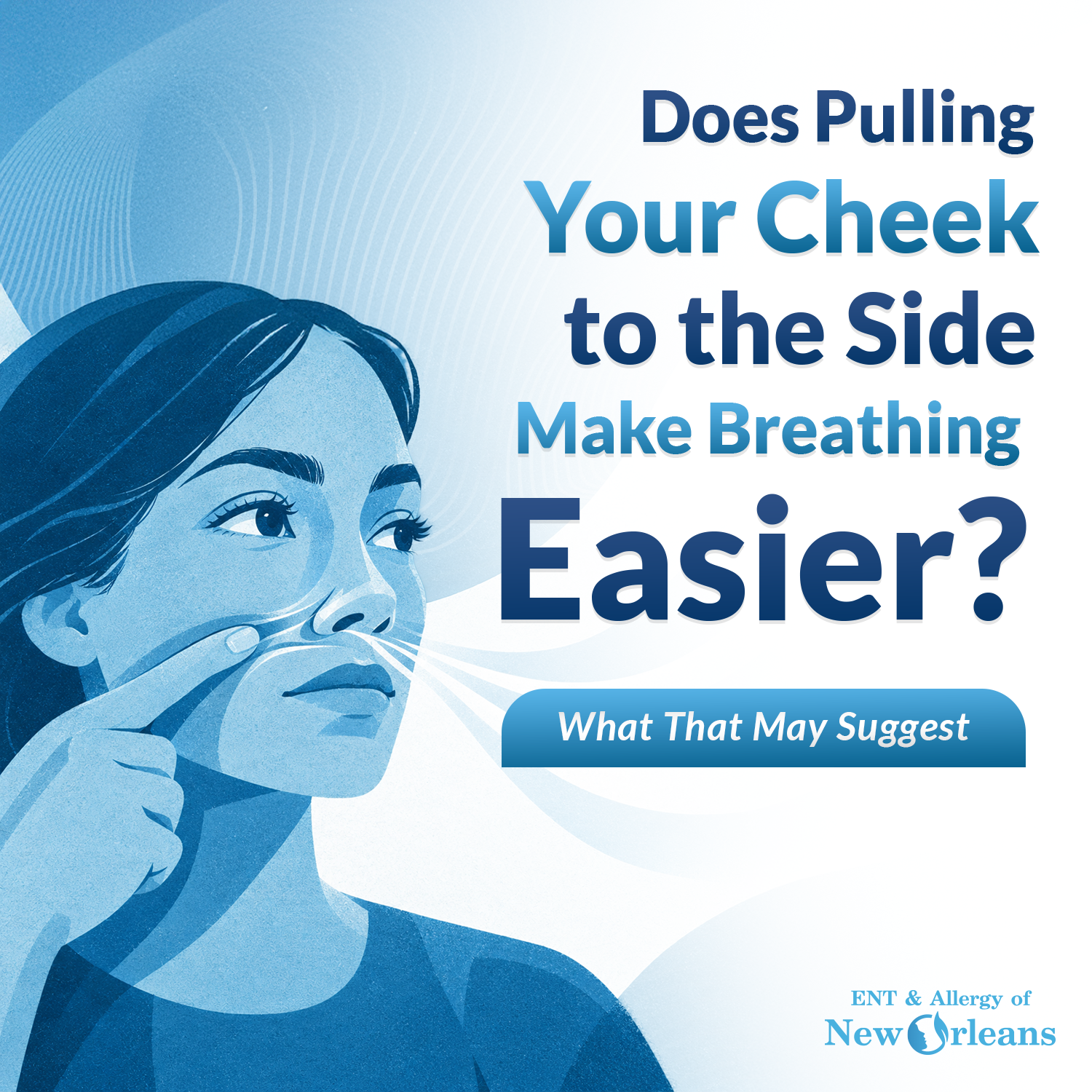
Does Pulling Your Cheek to the Side Make Breathing Easier? What That May Suggest
Persistent nasal congestion and breathing difficulties can be frustrating, particularly if they start affecting your day-to-day routine, activities, concentration, productivity, sleep, and comfort.
So you try blowing out the congestion, thinking it was some mucus buildup or thick mucus that’s making breathing through your nose a chore. You turn to Google, and a simple home test is suggested: gently pull your cheek to the side, away from your nose. And suddenly, you’re breathing easier, and the stuffiness eases. But what does this mean?
This simple home test may suggest nasal valve collapse.
At ENT & Allergy of New Orleans, we help patients in Hammond, LA, understand nasal obstruction and how nasal valve collapse may contribute to their breathing difficulties.
What Is the Nasal Valve?
The nasal valve is the narrowest part of the nasal airways and is located inside the nose where the nasal passages open and extend toward the back of the nose.
Two distinct structures make up the nasal valve:
- The internal nasal valve, which is located deeper inside the nose and slightly higher in the middle, and is formed by the nasal septum and the upper nasal cartilage
- The external nasal valve, which is the outer opening of the nose and located closer to the bottom of the nose, and is formed by the nostril and the surrounding cartilage
The nasal valve plays an important role in nasal airflow. As air passes through the nasal passages, the nasal lining helps warm, humidify, and filter it before it reaches the lungs.
The Cottle Maneuver and What It May Suggest
The Cottle maneuver is a simple bedside test that may be performed as part of a nasal valve collapse diagnosis.
During this simple home test, you place a finger on your cheek, just beside the nose, and gently pull to the side. This movement may temporarily widen part of the nasal airway. If breathing feels easier, it may suggest that the nasal valve region contributes to your obstruction, although the response alone cannot confirm nasal valve collapse.
However, it's important to note that breathing improvement with the maneuver can provide a clue of nasal valve collapse, but it does not diagnose it. Nasal congestion can occur due to several causes, not just nasal valve collapse. Other contributing factors may include nasal tissue inflammation, a deviated septum, nasal polyps, enlarged turbinates, or a combination of these factors.
A consultation with an ENT care provider can help assess your symptoms and your nasal valve and determine what might be contributing to persistent nasal obstruction and breathing difficulties.
What Is Nasal Valve Collapse?
Nasal valve collapse occurs when the nasal valve, which is the airway inside the nose, narrows. The nasal valve is already a narrow passageway, so even small structural changes in the nose can significantly restrict airflow and nasal breathing. This is one of many possible causes of nasal obstruction, blockage, and restricted airflow.
Nasal valve collapse may involve fixed narrowing of the nasal tissues, an inward movement of weakened nasal tissues during inhalation, or a combination of both mechanisms.
When there is nasal valve collapse, the structure weakens or collapses inward during inhalation, much like a straw being pinched. This may block airflow and make it difficult to breathe. It also creates a sense of persistent nasal congestion.
What Are the Common Symptoms of Nasal Valve Collapse?
Symptoms may vary per individual, but common signs may include:
- Difficulty breathing through one or both nostrils, which may worsen when lying down or during strenuous physical activity
- Persistent nasal congestion or blockage
- Resorting to mouth breathing
- Snoring
- A nose that may look different in some cases
What Causes Nasal Valve Collapse?
Nasal valve collapse can result from weakened nasal sidewalls. When the nasal sidewalls are weak, they become more prone to collapsing inward during breathing. This can narrow the airways and make it difficult to breathe through the nose.
Several other factors may contribute to nasal valve collapse or the weakening of the nasal sidewalls:
- A deviated septum
- Previous injury or trauma to the nose
- Previous nasal surgery, such as a nose job
- Aging
What Are the Types of Nasal Valve Collapse?
There are two types of nasal valve collapse based on the two major sections of this nasal airway:
- Internal nasal valve collapse involves the internal nasal valve.
- External nasal valve collapse involves the external nasal valve, causes one or both nostrils to collapse during nasal breathing, and is easier to see.
Based on the pattern of obstruction, there are also two types of nasal valve collapse:
- Static obstruction indicates that the nasal valve is narrow at all times, causing a persistent sense of nasal obstruction, tightness, or pressure.
- Dynamic obstruction indicates that the nasal valve collapses or weakens only during certain times of deep breathing, exercise, or sleep due to the stronger negative pressure. This type of nasal valve collapse may feel okay at times, but may worsen, making it harder to inhale.
When Is It Time to Consult With an ENT Specialist for Breathing Difficulties?
Improved breathing with the Cottle maneuver does not establish a diagnosis of nasal valve collapse. Rather, a positive response to the maneuver provides a clue, not definite proof. There are several factors or conditions other than nasal valve collapse that can cause persistent nasal obstruction and breathing difficulties.
Consider seeing an ENT specialist if you are experiencing:
- Persistent nasal congestion or obstruction that does not improve with conservative or standard treatments
- Difficulty breathing through the nose that significantly impacts daily activities, work, sleep, and comfort
- Nostrils that visibly pinch inward when breathing
- Increasing reliance on mouth breathing due to persistent nasal blockage
- Persistent nasal obstruction occurring alongside other frequent or recurring sinus symptoms
A consultation with an ENT care provider can help assess your symptoms and nasal structure to determine if nasal valve collapse, or some other structural issue, is contributing to persistent breathing difficulties.
Conclusion: Understanding Nasal Obstruction and Nasal Valve Collapse With ENT & Allergy of New Orleans
ENT & Allergy of New Orleans provides ear, nose, and throat care services for patients in Hammond and the greater New Orleans area. If you are experiencing persistent nasal obstruction and notice a positive response to the cheek-pull test, schedule an appointment with our team to learn what this can mean and discuss potential treatment options and management strategies.
Disclaimer:
The information provided in this article is for informational and educational purposes only and does not constitute medical advice. It is not intended to diagnose, treat, cure, or prevent any disease or medical condition. Always seek the guidance of your physician or other qualified healthcare provider with any questions you may have regarding a medical condition or treatment.
Results may vary: Treatment outcomes and health experiences may differ based on individual medical history, condition severity, and response to care.
Emergency Notice: If you are experiencing a medical emergency, call 911 or seek immediate medical attention.


