




Allergy News & Information Blog
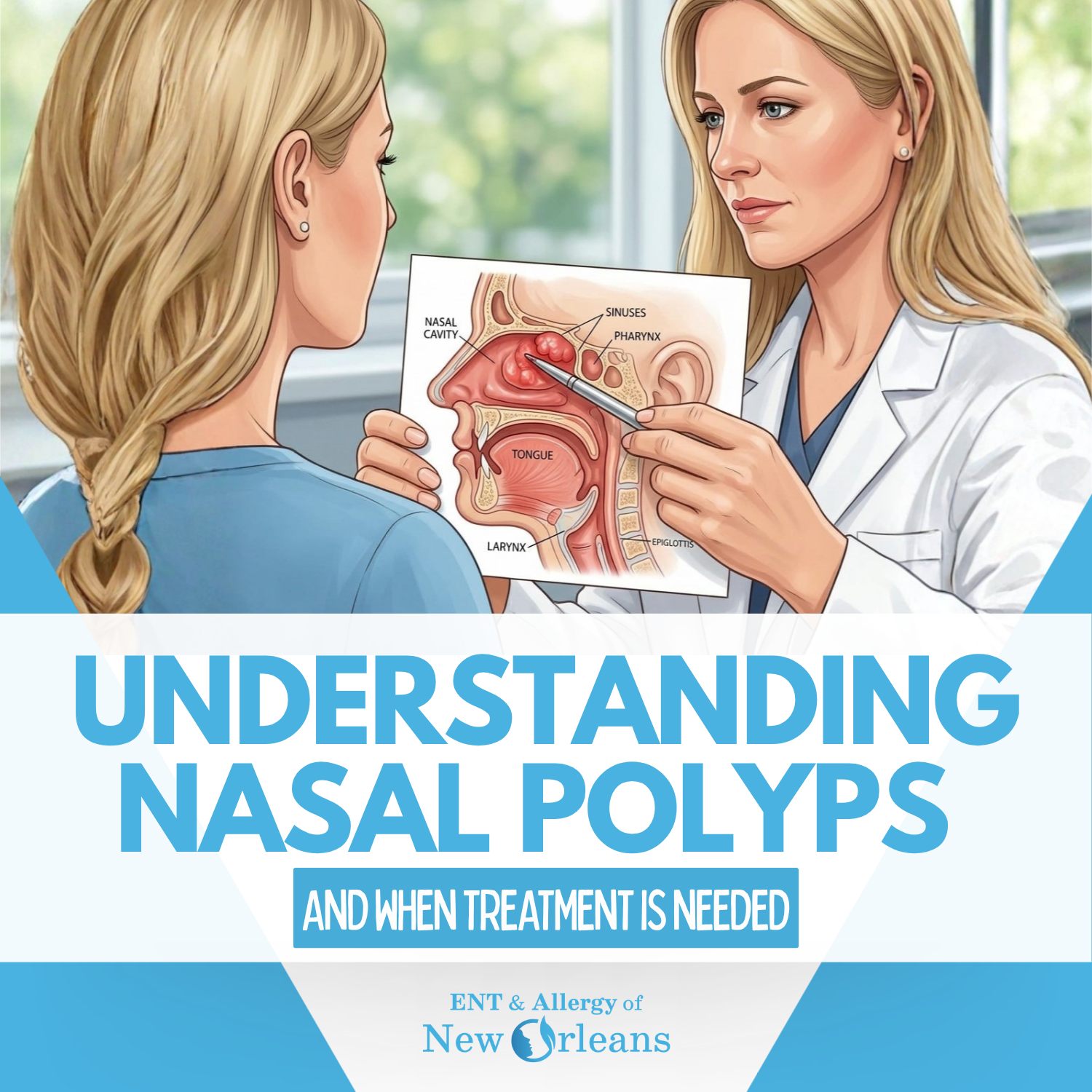
Understanding Nasal Polyps and When Treatment Is Needed
Nasal polyps are soft, noncancerous growths that can form inside the nose or sinuses. They usually develop in the setting of long-term inflammation rather than as a separate disease on their own. Some are small and cause few symptoms. Others grow large enough to block airflow, affect drainage, and make it harder to breathe through the nose or smell normally.
Because nasal polyps often develop gradually, people do not always realize what is causing their symptoms. Many assume they are dealing only with allergies, recurring sinus infections, or constant congestion. In reality, nasal polyps can overlap with those problems and may be part of the reason symptoms feel persistent. At ENT & Allergy of New Orleans, we think it helps to understand what nasal polyps can feel like, what may contribute to them, and when it may be time to discuss treatment.
What Nasal Polyps Can Feel Like
Nasal polyps do not always cause pain. More often, the symptoms are related to blockage and inflammation. You may notice that your nose feels stuffed up most of the time, that breathing through your nose is harder than it used to be, or that your sense of smell seems weaker. Some people also deal with postnasal drip, runny nose, sinus pressure, snoring, or repeat sinus infections.
Smell changes can be one of the more frustrating parts of nasal polyps. When smell drops off, taste may seem weaker too, which may affect appetite and enjoyment of food for some people. A reduced sense of smell can also overlap with chronic sinus inflammation, which is one reason we may look at the bigger picture instead of focusing on one symptom alone.
Why Nasal Polyps Develop
Nasal polyps are commonly linked to ongoing inflammation in the lining of the nose and sinuses. They are often seen in people with chronic sinus problems, allergies, asthma, or other inflammatory conditions. They are benign, but that does not mean they are harmless when they begin to affect airflow and drainage.
This is also why repeat sinus symptoms should not always be viewed as isolated episodes. When congestion, pressure, drainage, and smell loss keep coming back, there may be an inflammatory problem underneath the surface. Nasal polyps may contribute to ongoing or recurrent symptoms in some patients, especially when they appear along with chronic rhinosinusitis.
When Treatment May Be Needed
Not every nasal polyp needs aggressive treatment right away. But treatment becomes more important when polyps start interfering with breathing, smell, sleep, or daily comfort. Ongoing nasal blockage, frequent sinus infections, long-term drainage, and smell loss are all good reasons to talk about evaluation and treatment options.
Duration matters too. Chronic sinus disease is generally considered when symptoms such as congestion, drainage, facial pressure, or reduced smell continue for 12 weeks or longer. When that happens, polyps may be part of the problem, and it may make sense to look more closely at what is driving the inflammation.
Treatment Often Starts with Medication
In many cases, treatment starts with medication rather than surgery. Nasal steroid sprays are commonly used to reduce swelling and may help shrink polyps. Saline rinses are also often used to help clear mucus and irritants from the nose. For more severe symptoms, a short course of oral steroids may sometimes be considered.
The goal of medical treatment is to lower inflammation and improve symptoms. Some patients may notice symptom improvement with medical therapy, while others may still need additional treatment depending on the size of the polyps, the severity of symptoms, and whether other sinus conditions are present. Allergy treatment may also be part of the plan when allergies appear to be contributing to the inflammation.
When Surgery May Be Considered
Surgery may be discussed when medication does not provide enough relief or when polyps are large enough to keep causing blockage and repeat sinus problems. Endoscopic sinus surgery is commonly used in these cases. The goal is to remove the polyps and attempt to improve sinus drainage, depending on the patient’s anatomy and the pattern of disease.
Even then, surgery is usually one part of a longer treatment plan rather than the entire plan by itself. Because nasal polyps are tied to ongoing inflammation, follow-up care still matters after surgery. That may include sprays, saline rinses, allergy care, or other treatment to help manage inflammation and monitor for possible recurrence over time.
Signs It May Be Time to See an ENT
It may be time to schedule an evaluation if you have long-lasting congestion, trouble breathing through your nose, reduced smell, repeat sinus infections, or symptoms that keep returning without fully settling down. If symptoms last more than 10 days without improvement, worsen after seeming to improve, or continue for 12 weeks or longer, that also supports taking a closer look.
Some symptoms deserve faster attention, including swelling around the eyes, more serious vision symptoms, or unusually severe headache with sinus complaints. Those problems are not typical and should not be ignored.
Talk With Us About Nasal Polyps and Sinus Symptoms
Are you dealing with ongoing congestion, smell changes, sinus pressure, or nasal blockage that does not seem to fully improve? We can review your symptoms and explore the evaluation and treatment options that may fit your needs.
Schedule an appointment with ENT & Allergy of New Orleans to discuss your symptoms and next steps.
Disclaimer:
The information provided in this article is for informational and educational purposes only and does not constitute medical advice. It is not intended to diagnose, treat, cure, or prevent any disease or medical condition. Always seek the guidance of your physician or other qualified healthcare provider with any questions you may have regarding a medical condition or treatment.
Results may vary: Treatment outcomes and health experiences may differ based on individual medical history, condition severity, and response to care.
Emergency Notice: If you are experiencing a medical emergency, call 911 or seek immediate medical attention.


